The Ultimate Guide to Corrugated Boxes: Types, Uses & Benefits

Discover the benefits of corrugated boxes for packaging, as well as the flute grades and lining materials that are utilized.
When it comes to shipping, a corrugated box is significantly more protective than plain cardboard because it is constructed from three layers of kraft paper, two flat linerboards, and one fluted middle.
- 01Corrugated handles 95% of shipped products in North America because it resists bending and cushions goods.
- 02Flute size sets protection: A-flute (1/4″) cushions most, C-flute (3/16″) is most versatile, E-flute (1/16″) and F-flute (1/32″) print best.
- 03Wall count scales strength: single wall is standard, triple wall holds weights up to almost 300 lbs.
- 04Kraft liner is stiffest and most sustainable but costliest; test paper is cheaper, more recycled, and harder to print.
- 05Edge crush, flat crush, and Mullen burst tests verify box strength before use.
- 06Corrugated is protective, recyclable, and customizable, but weak against moisture and more expensive than lighter stock.
People frequently erroneously believe that cardboard is the sole kind of packaging material available for corrugated packaging. But that’s not all there is to it. One kind of material is cardboard, while another is corrugated cardboard. Although both materials are frequently mistaken for one another, their functions vary depending on the product.
This article will examine the distinctions between cardboard and corrugated cardboard, delve deeply into the many facets of corrugated material, examine quality control, and go over the advantages and applications of such material. We want you to have a better grasp of corrugated boards at the conclusion of this post so you can choose the ideal packaging for your goods.
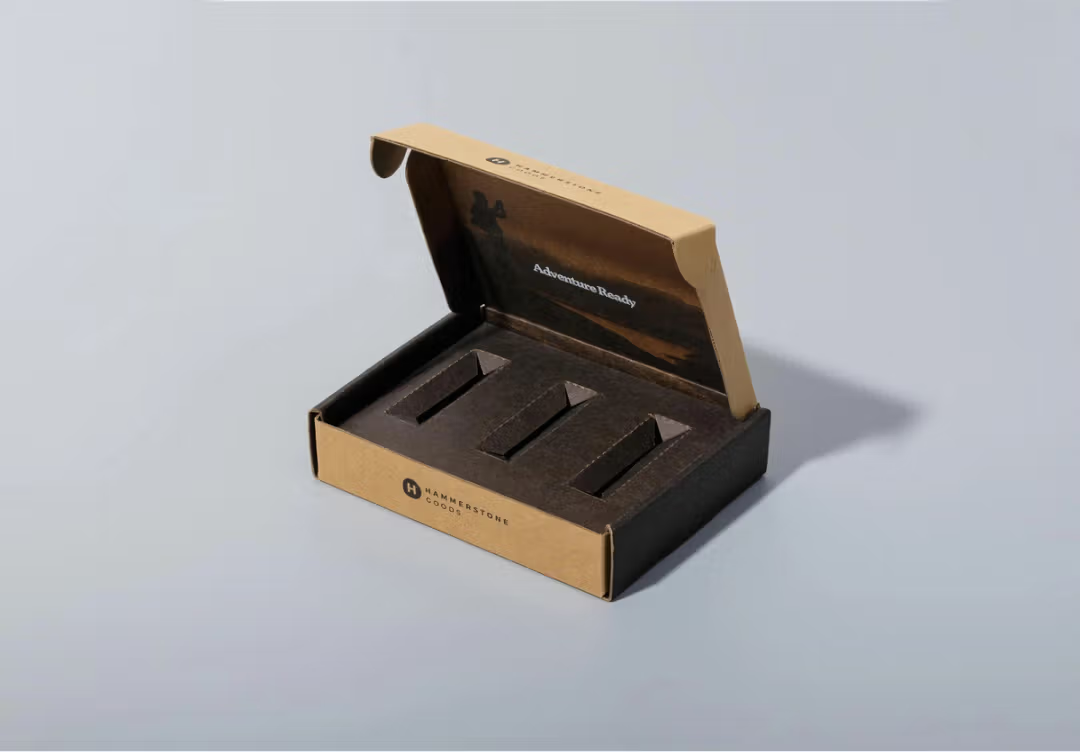
What is a Corrugated Box?
A corrugated box is a container composed of corrugated cardboard, a type of packaging material. Corrugated boxes are frequently used for shipping big or heavy goods because of their strength and durability. In actuality, corrugated material is used in 95% of all shipping goods in North America!
And, What is Corrugated Cardboard?
Three layers of kraft paper make up corrugated cardboard, also called corrugated fiberboard or corrugated cartons: an inner layer of fluted (wavy) medium and two outside layers of flat linerboard. For instance, corrugated cardboard is frequently used to make pizza boxes.
We will go into greater depth on how additional layers might be added for increased safety in certain situations.
Cardboard vs Corrugated – What’s the Difference?
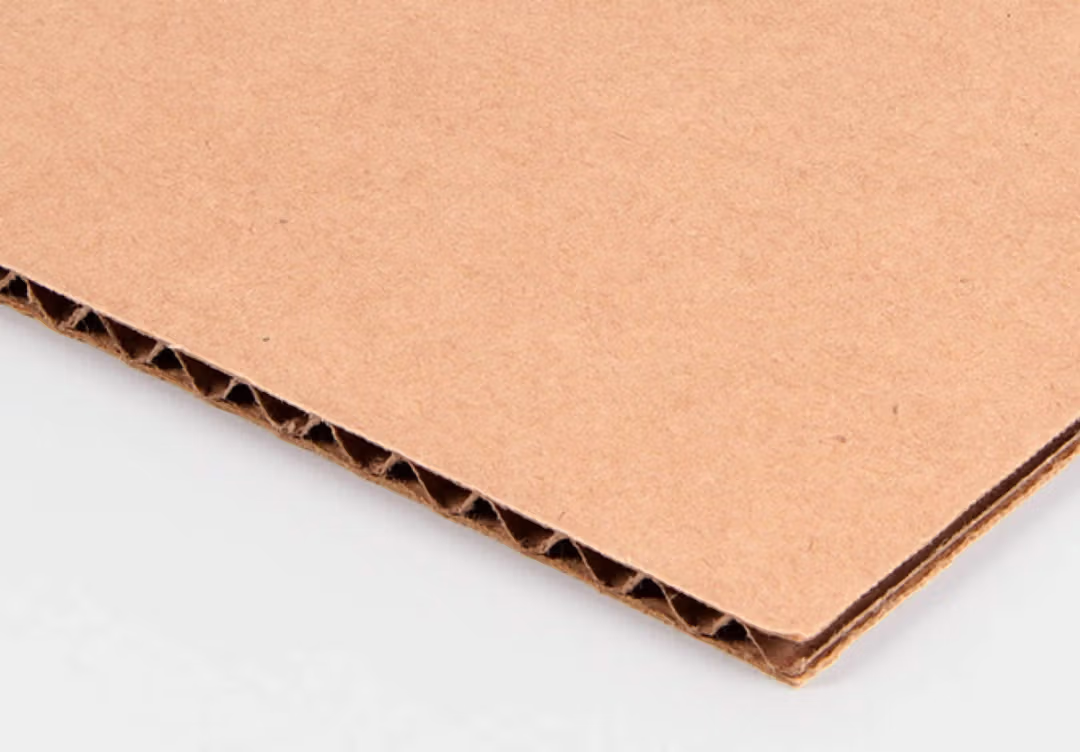
You might be wondering how corrugated packaging differs from cardboard now that you know what it is and how frequently it is used in transportation. We’ve already touched on the differences between cardboard and corrugated cardboard, but let’s take a closer look.
Paper stock or thick paper pulp are typically used to make cardboard. It can be used as structural support inside a box to maintain its shape during travel, however it is usually utilized in folding cartons for smaller products. But cardboard isn’t very protective on its own.
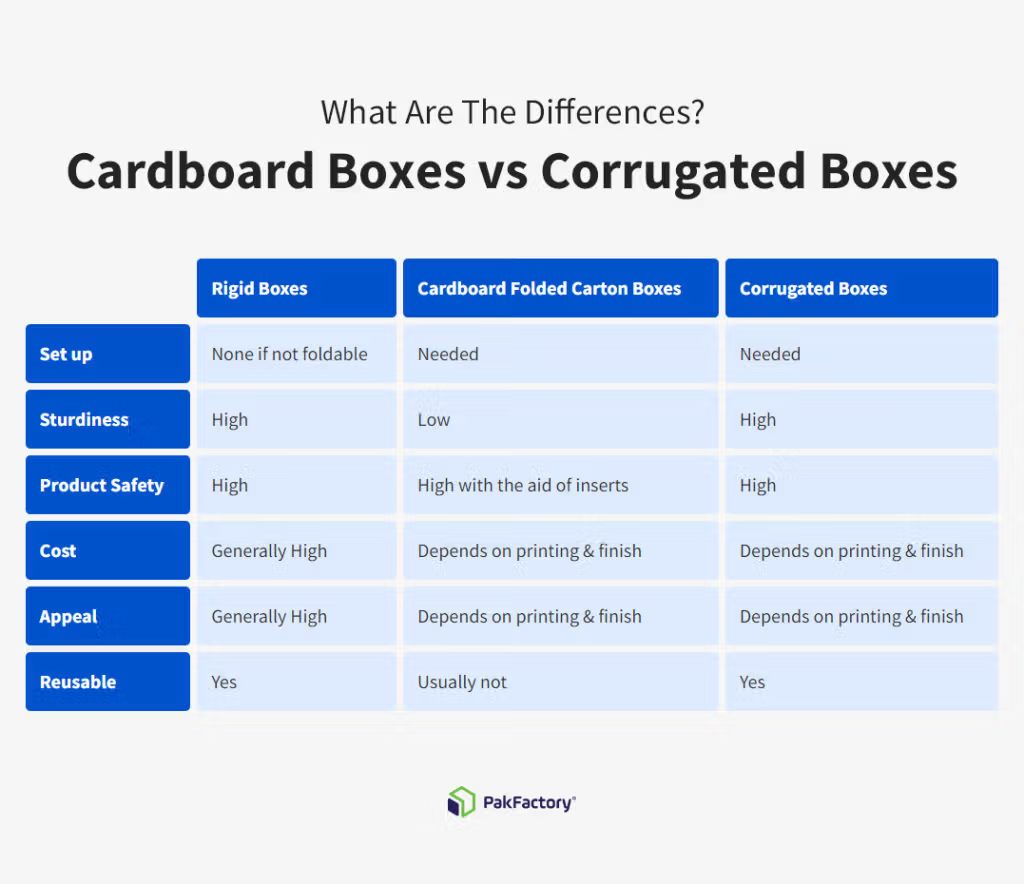
Conversely, corrugated is distinct. Because of its three layers of fiberboard, it is more resilient, protective, and adaptable. Whether your business is transporting a few products or big packages, this material is one of the greatest choices because it resists bending. Are you still not clear what the difference is? For a comparison, look at the graphic below.
Liners Materials
Selecting the most popular outside liner for making corrugated boxes should be easier if you have a deeper understanding of corrugated materials.
- Kraft Paper liners consist of 70-80% “virgin” chemical pulp fiber, which results in a top paper grade that is very stiff and durable. It is the most sustainable option out of all the types of corrugated paper materials available, but it is also the most costly.
- Test Paper liners are less expensive than Kraft because they use more recycled fiber content, resulting in less durability. The higher recycled fiber content also makes the paper more difficult to print on, but it is very common to use test paper as the inner linerboard of a corrugated box.
- Flute Paper Liners are available in Semi-Chem and Waste Based Fluting. Semi-Chem uses virgin fibers and a neutral sulphite semi-chemical process, while Waste Based Fluting uses 100% recycled fibers.
Speaking of flute paper, this is also an excellent time to discuss the various flute grades that are offered.
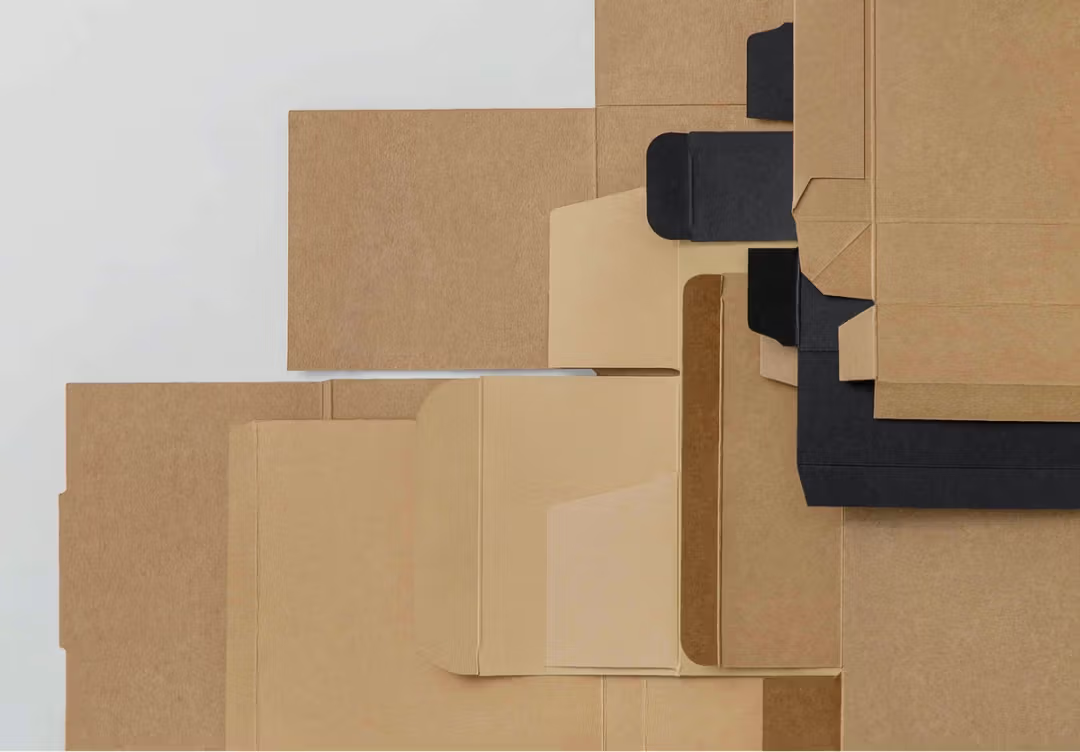
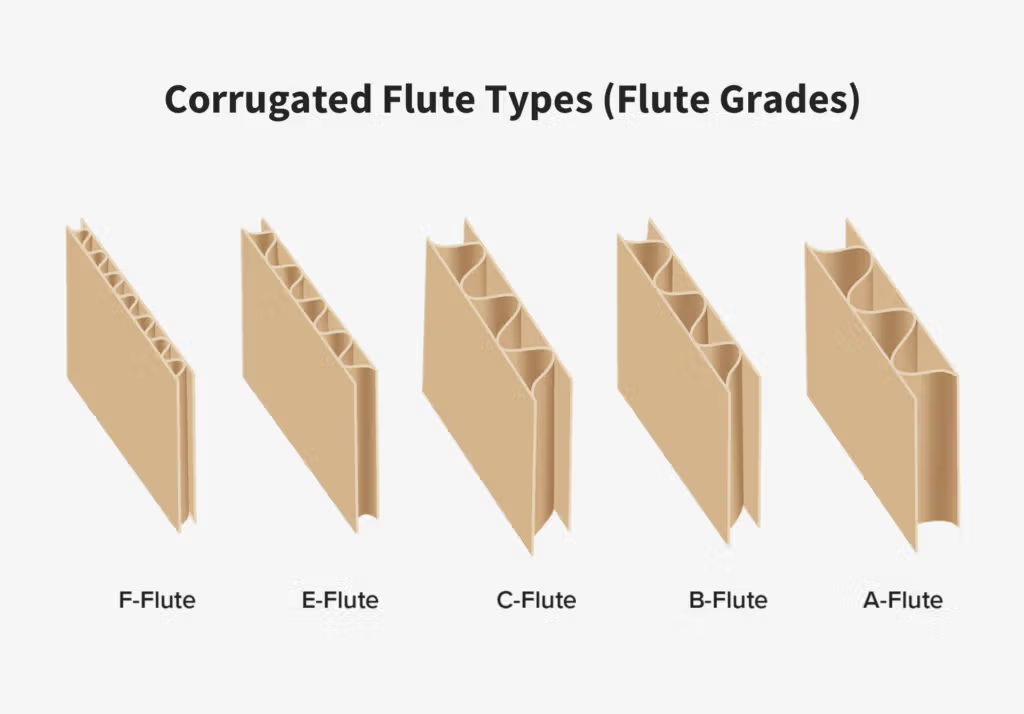
Corrugated Flute Types (Flute Grades)
Depending on the various flute grades, corrugated flute offers your package strength, cushioning, and compression resistance, enabling even greater personalization. However, for a brief visual comparison before delving into each flute profile in detail, take a look at our corrugated flute chart:
- A-Flute – 1/4” thick is the largest flute size. This flute grade has the highest protection and cushion qualities. It is very good at handling compression and stacking and is often used for packaging fragile items.
- B-Flute – 1/8” thick flute appears much thinner than others but is still quite strong, with excellent puncture and crush resistance. B-flute has outstanding all-around performance for various packaging or as additional material for padding and dividing. It even has a flatter surface for higher-quality printing and easy die-cutting.
- C-Flute – 3/16” thick is flexible and one of the corrugated boxes’ most versatile flute grades. It has average crush resistance, stacking strength, and printing properties. You have likely seen C-Flute corrugated cardboard used for shipping boxes but also for packing glass, dairy, and furniture products.
- E-Flute – 1/16” thick is not typically used for shipping. E-flute thickness is on the thinner side of flute grades, so it is often used as an alternative for paperboard folding cartons. However, you may still use E-Flute for cosmetics, fragile glass, ceramics, and other small and delicate products. E-Flute has excellent compression strength, crush resistance, and a relatively flat surface for high-quality printing applications.
- F-Flute – 1/32” thick has protective qualities similar to E-Flute but with an even smoother surface for high-quality printing. It is common for you to use F-Flute for clamshell packaging in the US fast-food industry, but in Europe, this grade of fluting is a standard option for specialty and retail packaging.
Types of Corrugated
Depending on the various flute grades, corrugated flute offers your package strength, cushioning, and compression resistance, enabling even greater personalization. A variety of flute constructions with varying thicknesses can be made by combining fluting and liners in different layers.
- Linerboard – The ‘face’ of the fiberboard sheet. You glue the flute onto this board.
- Single Face – Consists of one linerboard with the glued flute visible on one side. It is sometimes called corrugated paper.
- Single Wall – The most common thickness. Two sheets of linerboards with one fluted fiberboard glued in between.
- Double Wall – Three sheets of linerboard and two fluted fiberboards in between.
- Triple Wall – Four sheets of linerboard and three fluted fiberboards in between. This option can withstand heavier weights up to almost 300 lbs but is less flexible.
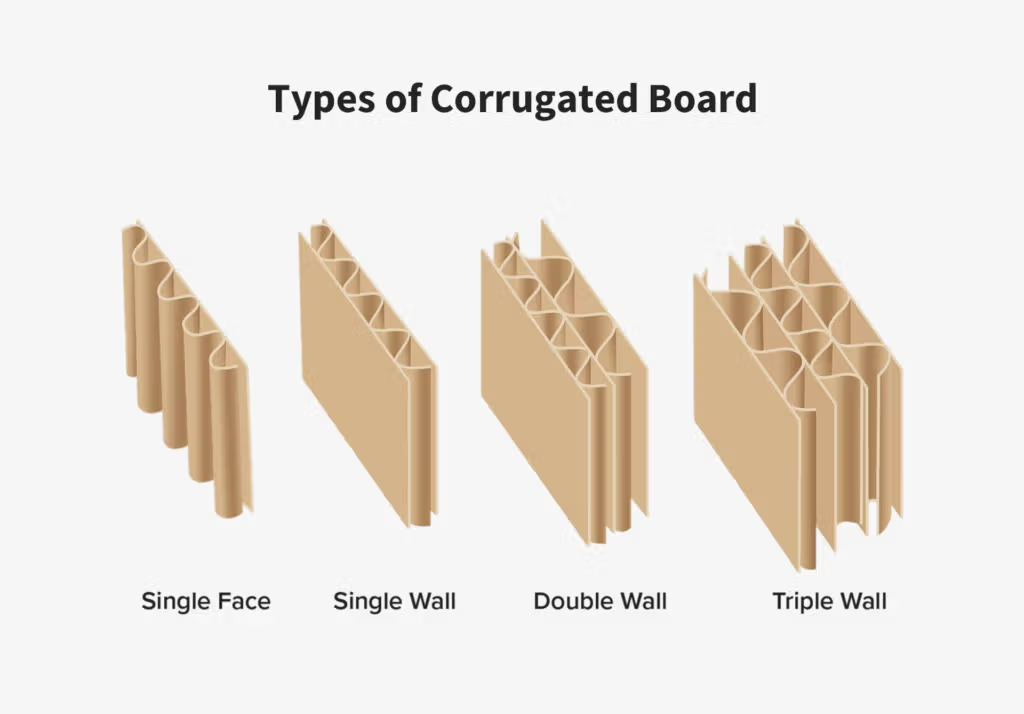
A closer look at double and triple walls reveals that these alternatives allow for various combinations of flute grades. The following are a few typical industrial combinations:
- AC Flute – A mix of the two most protective corrugated grades. AC Flute is excellent if you need extra protection for harsh shipping and handling processes.
- BC Flute – An outstanding all-around performer, this combination provides high-level transit protection and is common for shipping boxes.
- EB Flute – Provides superior transit strength and safety, while the outer E-Flute allows for an excellent, high-quality printing surface.
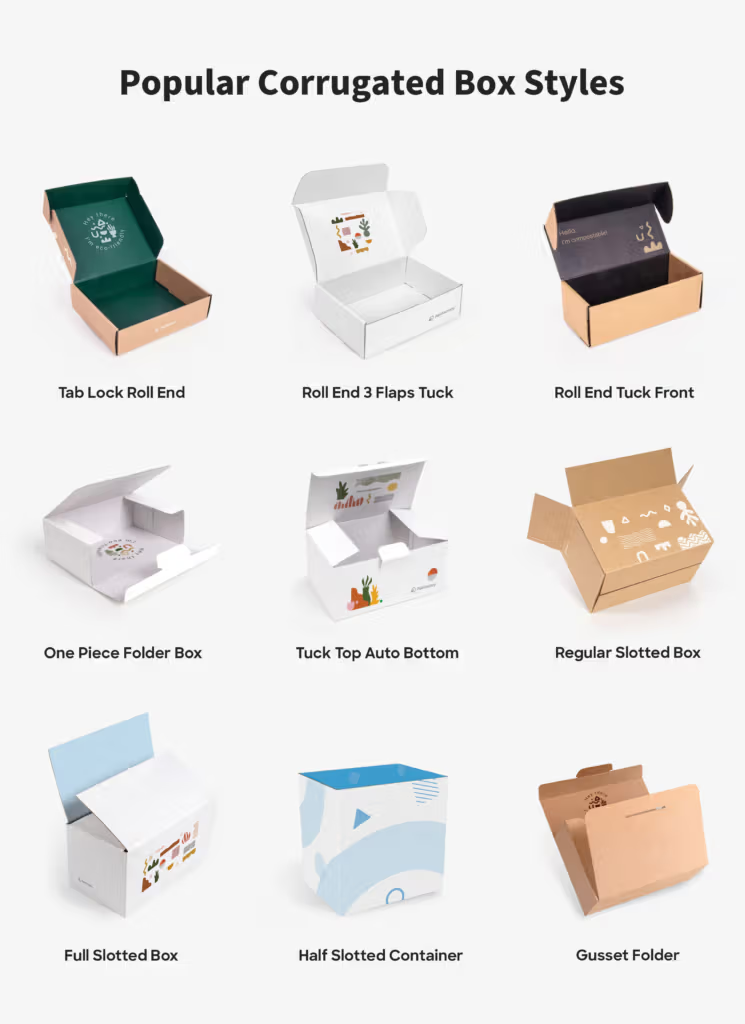
Corrugated Box Styles
The corrugated box styles are the final item to discuss before going on to quality control, after everything from structure to thickness has been discussed. Corrigated boxes can accommodate any packaging requirement by adding internal padding, blending layers, or altering flute grades.
Custom corrugated boxes satisfy the user’s particular needs. Typical corrugated box styles include the following:
- Tab Lock Roll End
- Roll End 3 Flaps Tuck
- Roll End Tuck Front
- One Piece Folder Box
- Tuck Top Auto Bottom
- Regular Slotted Box
- Full Slotted Box
- Half Slotted Container (HSC Box)
- Gusset Folder
Quality Control Tests
With so many design and customization possibilities at your disposal, you may have a lot of concerns regarding security. There must be methods for testing the strength of your unique package because corrogated boxes are vulnerable to stress and impact during packing, shipping, and storage.
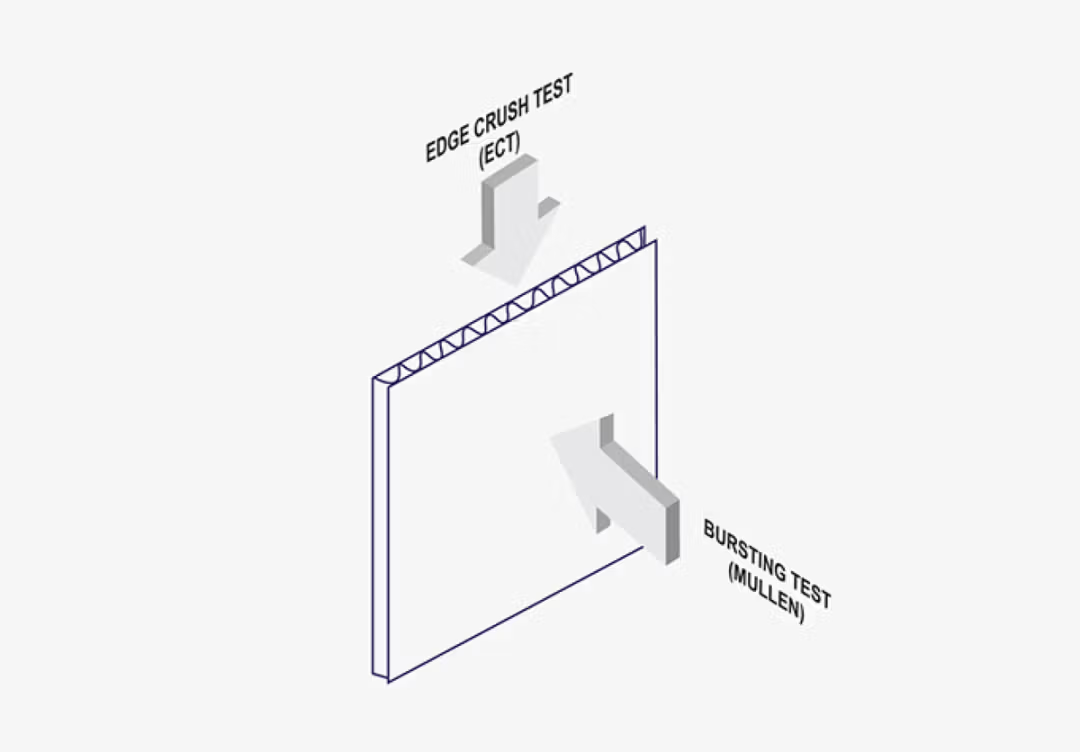
The Edge Crush, Flat Crush, and Burst Test are a few common tests.
- Edge Crush Test is one of the essential tests for corrugated cardboard. As the name implies, force is applied perpendicular to the edge of the corrugated cardboard until it buckles. The results ensure the strength and durability required to handle heavy loads and stack resistance.
- Flat Crush Test is also used and is similar to the Edge Crush Test. Force is applied directly on the surface area of the corrugated cardboard until the flute flattens and compromises its structure. This test similarly determines the compression and stacking resistance of the corrugated cardboard required to carry heavy loads.
- Mullen Test (or Burst Test), is a standard industry measures that challenges the durability of the corrugated cardboard surface by determining the force needed to puncture the board.
The quality of the custom corrugated packaging is guarantyd by all of these tests, giving your items the highest level of safety necessary to get to their destination.
Box Maker’s Certificate
It’s time to learn about the Box Maker’s Certificate (BMC) following customisation and extensive testing. The ECT-rated BMC and the Mullen-rated BMC are the two versions of the BMC that offer brief box specs.
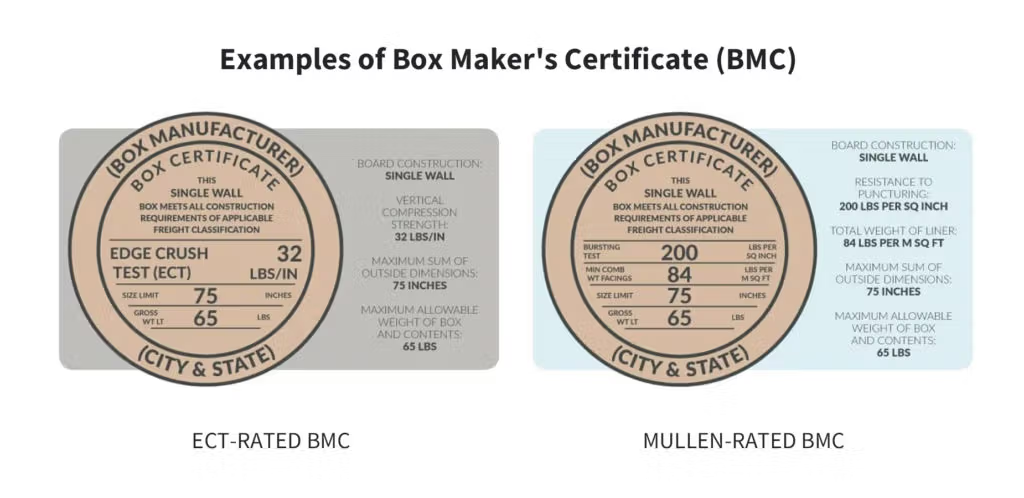
Although there are some variations, the information provided by these box maker certificates is the same:
- The Box Manufacturer on the outer ring indicates the company responsible for manufacturing your box.
- Board Construction is the information displayed directly under where it says box certificate. This information tells whether the box is a single, double, or triple wall.
- Minimum Combined Weight Facings is the total weight of the linerboard used before the entire linerboard is cut and made into boxes.
- Size Limit refers to the maximum outer measurements of the box, which are used for storage and shipping purposes.
- Gross Weight Limit is the maximum weight allowed for the box and the items within.
- City and State are located at the bottom of the label. It indicates the location where the box is constructed and shipped.
Benefits of Corrugated Packaging
You are likely already aware of a few advantages of corrugated packing if you have been following along. The following are the primary causes of corrugated cardboard’s popularity:
- Protection and Durability – Corrugated boxes provide excellent protection and durability for items during transit. They can absorb impacts and offer cushioning support, making them ideal for shipping. These boxes withstand harsh conditions without damaging the contents and serve as an effective barrier against the elements, making them best for e-commerce packaging.
- Environmentally friendly – Sustainability is becoming increasingly important, particularly in packaging. Corrugated cardboard is a top choice packaging option for sustainability because it is made from recycled fibers, which makes it easier to recycle.
- Customizable – Because of the many options available for raw materials and their environmental-friendliness, corrugated packaging is the best option for those looking for bespoke packaging, including printing. The shape and thickness are easily customizable alongside graphics and surface printing.
What About the Disadvantages of Corrugated Boxes?
Corrugated packaging is advantageous for many businesses, particularly e-commerce. Shipping and mailing may be easier to handle depending on the size and shape of the packaging. Nevertheless, using corrugated boxes still has certain disadvantages.
- Limited Weather Resistance – For starters, corrugated boxes are susceptible to inclement weather, such as rain or snow. The packaging can become deformed or lose its shape.
- Cost Considerations – The main drawback of using corrugated cardboard is its cost. It is relatively more expensive than other options due to supply chain disruptions, such as those caused by COVID-19, and environmental regulations aimed at reducing deforestation and promoting sustainable forestry.
For businesses with less budgets, these disadvantages could be discouraging. It’s crucial to balance these disadvantages against the advantages it provides in terms of protection, recyclability, and adaptability. Furthermore, there are numerous ways to cut expenses and produce reasonably priced luxury packaging.
Create Your Custom Corrugated Boxes Today!
Because corrugated packaging is strong and adaptable, you may use your imagination when designing corrugated boxes to ensure the safety of your product while it is being transported. Get in touch with our packaging experts right now to find out more and begin your project.